
How to save money fast is a common financial goal, especially when you are trying to build an emergency fund, pay down debt, prepare for a large purchase, or simply create more financial breathing room.
What You'll Learn
- Why Saving Money Matters
- How to Save Money Fast: 15 Practical Ways
- How to Save Money Fast on a Low Income
- How to Save $1,000 Fast
- Where Should You Keep Your Savings?
- How Much Money Should You Save?
The good news is that saving more money doesn’t always require a dramatic lifestyle change.
Small adjustments to recurring expenses, everyday spending, subscriptions, food costs, transportation, and shopping habits can create meaningful savings over time.
The key is to focus on expenses that you can realistically change without creating an unsustainable budget.
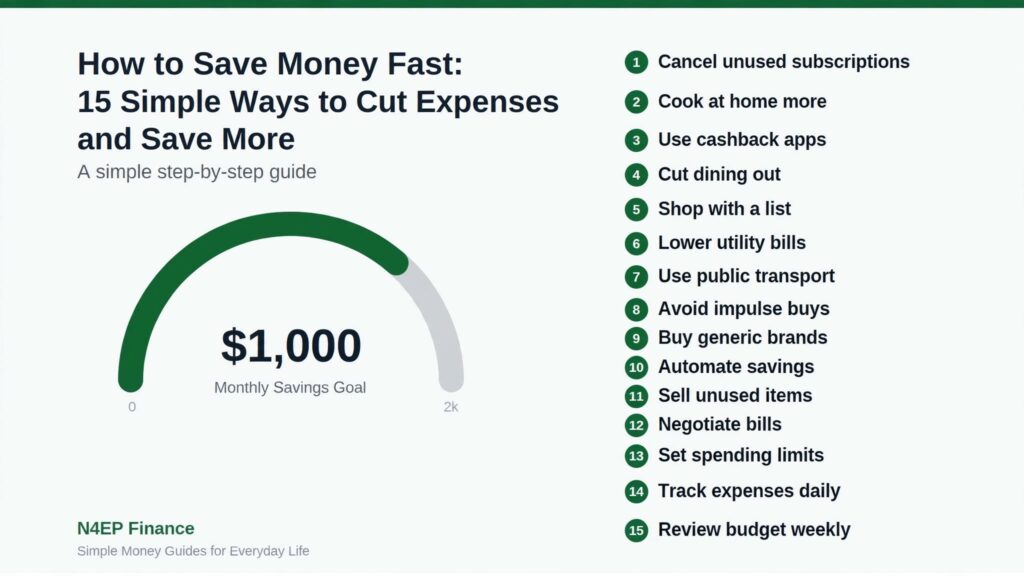
In this guide, you’ll learn how to save money fast using 15 practical strategies that can help you reduce unnecessary spending and keep more of your income.
Why Saving Money Matters
Saving money gives you more flexibility when unexpected expenses happen.
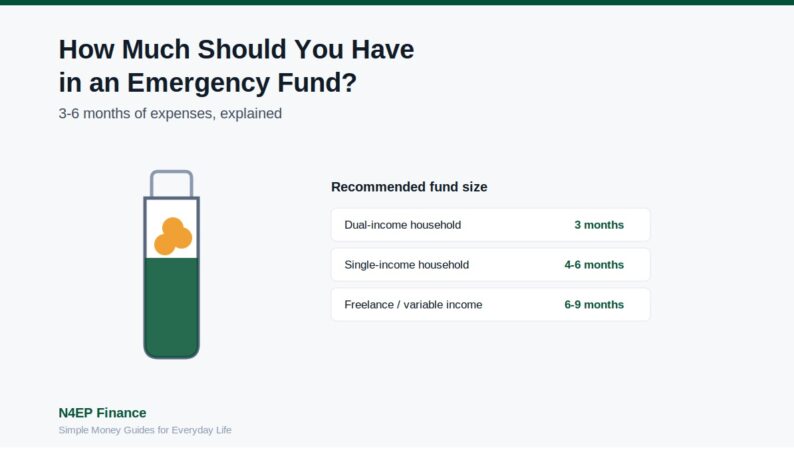
An emergency fund can help you handle costs such as a major car repair, an unexpected bill, or a temporary reduction in income without immediately relying on credit cards or loans.
Saving can also help you work toward larger goals, including:
- Buying a home
- Replacing a vehicle
- Paying for education
- Taking a vacation
- Preparing for retirement
- Starting a business
- Paying down debt
Your savings strategy doesn’t have to be complicated.
The first step is understanding where your money goes and identifying opportunities to keep more of it.
For more practical personal-finance guidance, explore the N4EP Saving section.
How to Save Money Fast: 15 Practical Ways
1. Review Your Monthly Expenses
Before cutting expenses, find out exactly where your money is going.
Review your bank and credit card transactions from the last 30 days.
Create categories such as:
- Housing
- Groceries
- Transportation
- Insurance
- Utilities
- Dining out
- Entertainment
- Shopping
- Subscriptions
- Debt payments
- Savings
You may discover expenses you barely remember making.
For example, several small purchases of $10 to $20 may seem insignificant individually but can become hundreds of dollars over a month.
Understanding your spending is one of the most important steps in learning how to save money fast.
2. Cancel Unused Subscriptions
Subscriptions can quietly consume money every month.
Review services such as:
- Streaming platforms
- Music memberships
- Fitness apps
- Software subscriptions
- Gaming services
- News memberships
- Cloud storage plans
If you pay $15 per month for a service you rarely use, canceling it saves $180 per year.
If you have several unused subscriptions, the savings can become significant.
Don’t assume a small monthly charge doesn’t matter.
Recurring expenses continue until you stop them.
3. Reduce Restaurant and Takeout Spending
Food can be one of the easiest categories to change.
Eating at restaurants occasionally is perfectly reasonable, but frequent takeout can become expensive.
For example, suppose you spend $25 on takeout three times per week.
That is approximately:
$25 × 3 × 4 = $300 per month
Reducing that spending by half could free up around $150 per month.
You don’t have to eliminate restaurant meals completely.
Instead, set a realistic monthly dining budget and prepare more meals at home.
4. Plan Your Grocery Shopping
Another practical way to save money fast is to make grocery shopping more intentional.
Before going to the store:
- Check what you already have.
- Create a weekly meal plan.
- Make a shopping list.
- Compare prices.
- Avoid shopping while hungry.
- Use items you already purchased before buying more.
You can also compare store brands with name brands.
For many everyday products, the cheaper option may provide similar value.
However, don’t buy something simply because it is discounted.
A product you don’t need isn’t a saving just because it is on sale.
5. Use the 24-Hour Rule Before Buying
Impulse purchases can make it difficult to save.
For nonessential purchases, consider waiting at least 24 hours before buying.
For larger purchases, you may want to wait several days or longer.
During the waiting period, ask:
- Do I actually need this?
- Will I still want it next week?
- Do I already own something similar?
- Does it fit my budget?
- Would I rather put this money toward another goal?
This simple pause can reduce unnecessary spending without requiring you to eliminate shopping completely.
6. Reduce Your Monthly Bills
Some of your biggest savings opportunities may come from recurring bills.
Review:
- Phone plans
- Internet service
- Insurance
- Utilities
- Memberships
- Financial fees
Contact providers and ask whether lower-cost plans are available.
For insurance, compare coverage and premiums carefully rather than choosing a policy based only on price.
The goal is to reduce unnecessary costs while maintaining appropriate coverage.
For more information about insurance and financial protection, visit the N4EP Insurance section.
7. Make Saving Automatic
One of the easiest ways to save consistently is to automate the process.
Instead of waiting until the end of the month to see what’s left, arrange an automatic transfer to your savings account after payday.
For example:
Monthly income: $4,000
Automatic savings: $400
Remaining amount: $3,600
You can adjust the amount based on your own financial situation.
Automation removes one common problem: forgetting to save.
It also makes saving part of your regular financial routine.
8. Create a Separate Savings Account
Keeping savings separate from everyday spending money can make it easier to avoid accidental spending.
Consider having separate accounts or categories for different goals, such as:
- Emergency fund
- Vacation
- Home purchase
- Car replacement
- Annual expenses
- Long-term savings
You don’t necessarily need a separate bank for every goal.
Many banks allow customers to create multiple savings buckets or categories.
The important thing is making your savings visible and intentional.
9. Use a Weekly Spending Limit
Monthly budgets can sometimes feel too broad.
Instead, create weekly spending limits for flexible categories.
For example, if you have $400 available for discretionary spending during the month, you could aim for approximately:
$400 ÷ 4 = $100 per week
This doesn’t need to be exact.
The purpose is to give yourself a simple limit that you can monitor throughout the week.
If you spend less one week, you may have more flexibility later.
10. Reduce Transportation Costs
Transportation can represent a significant part of a household budget.
Look for opportunities to reduce costs by:
- Combining errands
- Carpooling
- Using public transportation when practical
- Walking for short trips
- Comparing fuel prices
- Maintaining your vehicle properly
- Reducing unnecessary driving
If you have multiple vehicles, consider whether each one is necessary.
Vehicle ownership can include more than a monthly payment.
You may also pay for insurance, fuel, maintenance, registration, parking, and repairs.
Reducing transportation costs can therefore have a larger impact than cutting a few small purchases.
11. Shop Around Before Major Purchases
Before making a large purchase, compare prices from multiple retailers.
This is especially useful for:
- Electronics
- Appliances
- Furniture
- Insurance
- Travel
- Automotive services
- Home improvement
Look at the total cost rather than just the advertised price.
Shipping, fees, warranties, financing costs, and maintenance can change the real cost of a purchase.
If you don’t need something immediately, waiting for a better price may also help.
12. Avoid Lifestyle Inflation
Lifestyle inflation happens when spending increases as income increases.
For example, imagine someone receives a $600 monthly raise and immediately increases spending by $600.
Their income increased, but their ability to save didn’t.
Instead, consider directing part of every income increase toward savings or debt reduction.
For example:
$600 raise → $300 savings + $200 debt payments + $100 lifestyle spending
This approach allows you to enjoy higher income while still improving your financial position.
13. Use Cash or Spending Limits for Problem Categories
If you repeatedly overspend in certain categories, a spending limit can help.
For example, if entertainment is a problem category, decide on a fixed amount before the month begins.
Once that amount is used, wait until the next budget period unless you intentionally move money from another category.
The purpose isn’t to make spending uncomfortable.
It’s to create a clear boundary that prevents one category from taking money away from important financial goals.
14. Put Unexpected Money Toward Your Goals
Occasionally, you may receive money that wasn’t part of your normal monthly income.
Examples can include:
- Tax refunds
- Bonuses
- Cash gifts
- Rebates
- Side-income payments
- Certain work-related incentives
You don’t necessarily need to save all of it.
One approach is to divide unexpected money between financial goals and personal spending.
For example:
$1,000 unexpected income
- $600 → savings
- $250 → debt
- $150 → personal spending
The exact split depends on your circumstances.
The important thing is avoiding the assumption that unexpected money must immediately be spent.
15. Set a Specific Savings Goal
A vague goal such as “I want to save more” is difficult to measure.
Instead, create a specific target.
For example:
Save $5,000 in 12 months.
That means you would need to average approximately:
$5,000 ÷ 12 = $417 per month
A specific target makes it easier to track progress.
You can also divide the goal into smaller milestones.
For example:
- $500
- $1,000
- $2,500
- $5,000
Seeing progress can make saving feel more achievable.
How to Save Money Fast on a Low Income
If your income is limited, saving can feel difficult.
The first priority should be making sure essential expenses are covered.
Then look for realistic opportunities to reduce spending or increase income.
Consider:
- Reviewing recurring bills
- Cooking more meals at home
- Reducing unnecessary subscriptions
- Comparing insurance costs
- Using free entertainment
- Selling unused items
- Taking on occasional additional work
- Directing small amounts toward savings
Even $25 or $50 per month can create a useful financial habit.
The goal isn’t to save an unrealistic amount.
The goal is to build a sustainable system that improves your financial position over time.
How to Save $1,000 Fast
If your goal is to save $1,000 quickly, break it into smaller targets.
For example:
| Time Period | Approximate Savings Needed |
|---|---|
| 30 days | $33 per day |
| 8 weeks | $125 per week |
| 3 months | $334 per month |
| 6 months | $167 per month |
| 12 months | $84 per month |
These numbers are simple planning examples rather than requirements.
You could combine several strategies.
For example:
- Cancel subscriptions: $40
- Reduce takeout: $100
- Lower shopping spending: $75
- Reduce transportation costs: $50
- Automatic savings: $100
That could create approximately $365 in monthly savings.
Your actual opportunities will depend on your income and expenses.
Where Should You Keep Your Savings?
For short-term goals and emergency savings, many people use savings accounts because the money can generally be accessed more easily than long-term investments.
When choosing an account, consider:
- Interest rate
- Account fees
- Minimum balance requirements
- Withdrawal rules
- Accessibility
- Deposit insurance or protection applicable in your country
The right account depends on your financial situation and location.
For longer-term financial goals, different options may be appropriate.
You can learn more about investing and long-term financial planning through the N4EP Investing section.
How Much Money Should You Save?
There isn’t one savings percentage that works for every household.
Your ideal savings amount depends on:
- Income
- Housing costs
- Debt
- Family size
- Emergency savings
- Financial goals
- Job stability
- Other financial obligations
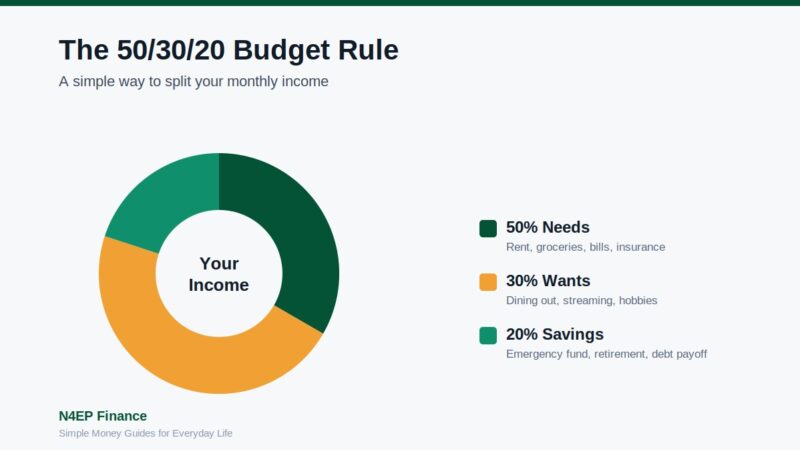
Some people may be able to save 20% or more of their income, while others may need to begin with 5% or even a smaller amount.
The most important thing is to establish a realistic habit.
As your income increases or expenses decrease, you can gradually increase the amount you save.
A Simple Money-Saving Plan
If you’re looking for a simple way to put how to save money fast into practice, try this five-step system:
Step 1: Find Your Starting Point
Review the last 30 days of spending.
Step 2: Identify Your Biggest Opportunities
Focus on large recurring expenses before worrying about tiny purchases.
Step 3: Choose Three Expenses to Reduce
Pick changes that are realistic enough to maintain.
Step 4: Automate Your Savings
Move the money automatically after payday.
Step 5: Review Your Progress
Check your results every month and adjust your plan.
This approach keeps saving simple and measurable.
Common Money-Saving Mistakes
Trying to Cut Everything at Once
A budget that removes every enjoyable expense may be difficult to maintain.
Choose changes that you can realistically continue.
Focusing Only on Small Purchases
Skipping a $4 coffee occasionally may help, but reducing a $200 recurring expense can have a much larger effect.
Look at your biggest expenses first.
Saving Only What Is Left
If you wait until the end of the month, there may be nothing left to save.
Consider making savings a planned expense.
Ignoring High-Interest Debt
If you have expensive debt, paying it down may be an important part of your overall financial strategy.
Review the interest rates and terms before deciding how to divide money between savings and debt repayment.
For additional credit and debt resources, visit the N4EP Credit & Banking section.
Giving Up After One Bad Month
Unexpected expenses happen.
One difficult month doesn’t mean your entire financial plan has failed.
Review what happened and continue.
Frequently Asked Questions
How can I save money fast?
Start by reviewing your recent spending and identifying expenses you can realistically reduce. Cancel unused subscriptions, reduce unnecessary dining and shopping, lower recurring bills where possible, automate savings, and set a specific financial goal.
How can I save $1,000 quickly?
Break the $1,000 goal into smaller weekly or monthly targets. Combine spending reductions with additional income when possible, and automatically move the money into savings so it isn’t accidentally spent.
What is the fastest way to save money?
The fastest approach is usually to combine several strategies rather than relying on one change. Review large recurring expenses, reduce discretionary spending, automate savings, and consider additional income opportunities.
How much should I save each month?
There is no universal amount. Start with an amount that fits your income and expenses, then increase your savings rate as your financial situation improves.
How can I save money on groceries?
Create a meal plan, shop with a list, compare prices, use store brands when appropriate, reduce food waste, and avoid buying items simply because they are discounted.
Is it better to save money or pay off debt?
The answer depends on the type of debt, interest rate, emergency savings, and your overall financial situation. High-interest debt can be expensive, while maintaining some emergency savings can help prevent new debt when unexpected expenses occur.
How do I save money when I don’t earn much?
Start small and focus on realistic changes. Review recurring expenses, reduce unnecessary spending, look for ways to increase income, and automate even a modest amount into savings.
Should I keep my savings in a checking account?
Keeping everyday spending money and savings separate can make it easier to avoid spending your savings. Consider an appropriate savings account for money you may need in the short term.
Final Thoughts
Learning how to save money fast doesn’t require completely changing your lifestyle.
Start by understanding where your money goes. Then focus on the expenses that offer the biggest realistic opportunities for improvement.
Cancel subscriptions you don’t use, reduce unnecessary food spending, review recurring bills, control impulse purchases, automate savings, and create specific financial goals.
Most importantly, don’t focus only on speed.
The best money-saving strategy is one you can maintain after the initial motivation disappears.
Even small monthly improvements can add up significantly over time.
N4EP Finance Tip: Don’t wait for the perfect time to start saving. Choose one expense to reduce today, move the money you save into a separate savings account, and build from there.
Disclaimer: This article is for educational purposes only and should not be considered personalized financial advice. Individual financial circumstances vary.