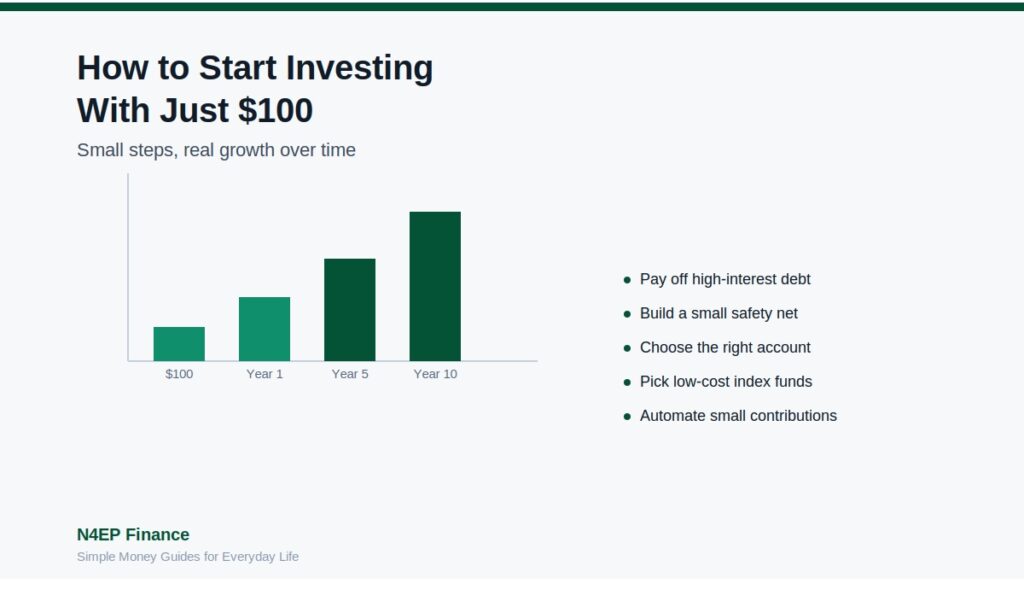
One of the biggest myths in personal finance is that you need thousands of dollars to start investing. In reality, you can start investing with as little as $100 thanks to fractional shares, low-cost index funds, and beginner-friendly brokerage apps. This guide walks through exactly how to get your first $100 working for you.
What You'll Learn
- Step 1: Pay Off High-Interest Debt First
- Step 2: Build a Small Safety Net First
- Step 3: Choose the Right Account Type
- Step 4: Pick Low-Cost, Beginner-Friendly Investments
- Step 5: Automate Small, Consistent Contributions
- Common Mistakes to Avoid When You Start Investing
Step 1: Pay Off High-Interest Debt First
Before you start investing, check whether you’re carrying high-interest debt, especially credit cards charging 20%+ APR. Since the stock market historically returns around 7-10% annually, paying off high-interest debt is effectively a guaranteed better “return” than investing that same $100.
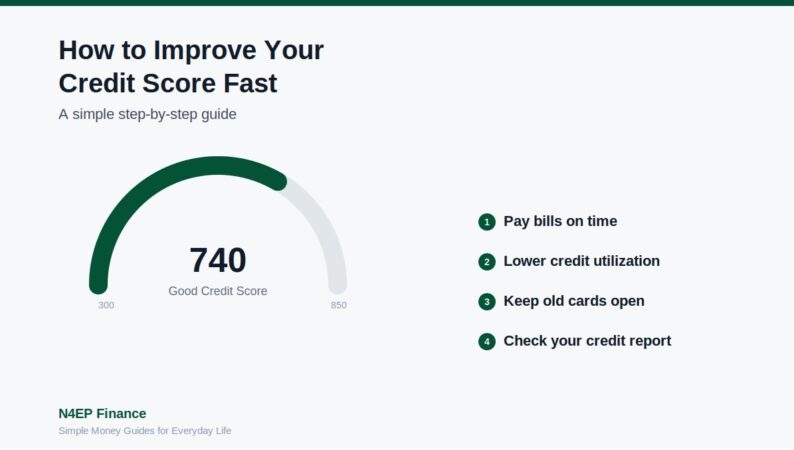
If you’re working on this, our guide on how to improve your credit score also covers habits that reduce reliance on high-interest credit going forward.
Step 2: Build a Small Safety Net First
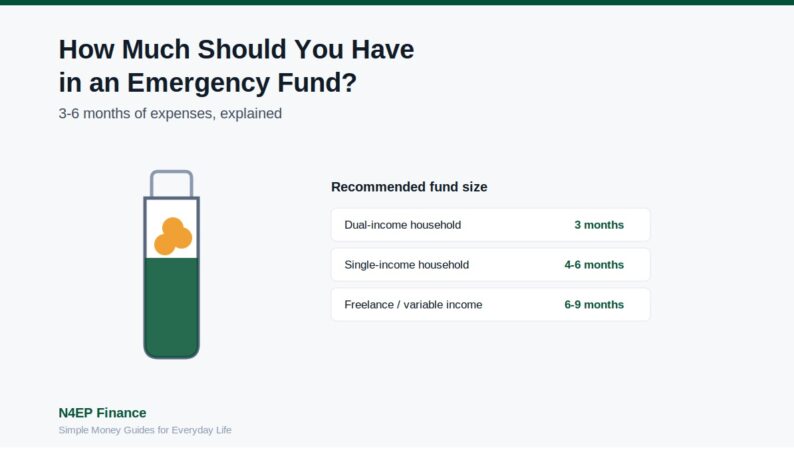
You don’t need a full six-month emergency fund before you start investing, but having at least $500-$1,000 set aside prevents you from having to sell investments at a loss if an unexpected expense pops up. See our guide on how much to keep in an emergency fund if you haven’t started this yet.
Step 3: Choose the Right Account Type
Where you invest your first $100 matters. Common beginner-friendly options include:
| Account Type | Best For |
|---|---|
| Employer 401(k) | Free employer match money (if offered) |
| Roth IRA | Tax-free growth, flexible withdrawal rules |
| Taxable brokerage account | No contribution limits, full flexibility |
If your employer offers a 401(k) match, that should usually be your first $100 — it’s essentially free money that instantly doubles part of your contribution.
Step 4: Pick Low-Cost, Beginner-Friendly Investments
With just $100, you don’t want to be picking individual stocks. Instead, most beginners start investing through:
- Index funds — A single fund that holds hundreds of companies (like the S&P 500), spreading out your risk automatically.
- Target-date funds — Automatically adjust your investment mix as you get closer to retirement.
- Fractional shares — Many brokerages now let you buy a “slice” of an expensive stock for as little as $1.
Look for funds with a low expense ratio (ideally under 0.20%) since fees can quietly eat into your returns over decades.
Step 5: Automate Small, Consistent Contributions
The real power of investing with small amounts comes from consistency, not the size of any single contribution. Setting up an automatic $25-$50 monthly transfer into your investment account means you’re consistently buying in — sometimes when prices are high, sometimes when they’re low — which smooths out your average cost over time. This strategy is known as dollar-cost averaging.
Common Mistakes to Avoid When You Start Investing
- Trying to time the market — Even professional investors struggle to consistently predict short-term market movements.
- Checking your balance daily — Short-term swings are normal; checking too often can lead to panic-selling.
- Chasing trending stocks — Meme stocks and hot tips are far riskier than boring, diversified index funds.
Where to Learn More
The U.S. Securities and Exchange Commission runs Investor.gov, a free resource with beginner-friendly tools, calculators, and warnings about common investment scams — a great next stop once you’re ready to go deeper.
The Bottom Line
You don’t need to wait until you have thousands of dollars saved up. The moment you’re ready to start investing, even $100 put into a low-cost index fund and left alone can grow meaningfully over time thanks to compound growth. The most important step isn’t the amount — it’s starting at all.
Disclaimer: This article is for general informational purposes only and does not constitute personalized financial advice. Please consult a licensed financial professional before making financial decisions.