

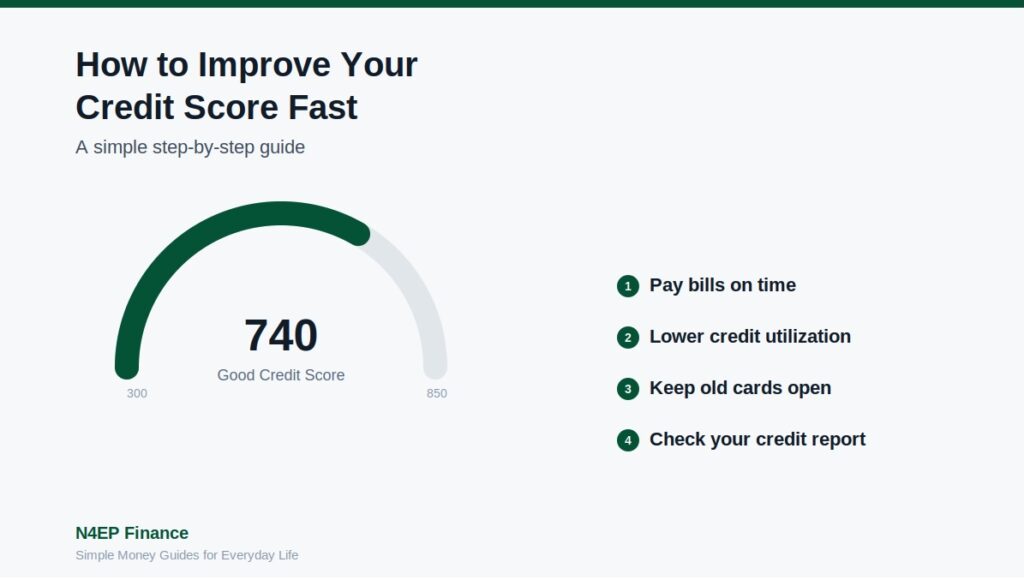
If you want to improve your credit score, the good news is that it doesn’t require magic tricks or expensive credit repair services. Your credit score is based on a handful of well-known factors, and once you understand them, you can start making real progress in just a few weeks.
What You'll Learn
- What Actually Makes Up Your Credit Score?
- Step 1: Pay Every Bill On Time
- Step 2: Lower Your Credit Utilization Ratio
- Step 3: Don’t Close Old Credit Cards
- Step 4: Limit New Credit Applications
- Step 5: Check Your Credit Report for Errors
This guide breaks down exactly how to improve your credit score, step by step, using habits that actually move the needle.
What Actually Makes Up Your Credit Score?
In the U.S., most lenders use the FICO Score, which is calculated from five main factors:
| Factor | Weight |
|---|---|
| Payment History | 35% |
| Credit Utilization | 30% |
| Length of Credit History | 15% |
| Credit Mix | 10% |
| New Credit Inquiries | 10% |
Notice that payment history and credit utilization together make up 65% of your score. If you want to improve your credit score quickly, these two areas deserve most of your attention.
Step 1: Pay Every Bill On Time
Late payments are one of the most damaging things for your credit score, and they can stay on your credit report for up to seven years. To stay on track:
- Set up autopay for at least the minimum payment on every account.
- Add calendar reminders a few days before each due date.
- If you’ve missed a payment, call the lender — some will waive a first-time late fee or agree not to report it if you catch up quickly.
Step 2: Lower Your Credit Utilization Ratio
Credit utilization is the percentage of your available credit that you’re currently using. For example, if you have a $5,000 credit limit and a $1,500 balance, your utilization is 30%.
To improve your credit score through utilization:
- Aim for under 30% utilization on each card, and under 10% if you want to maximize your score.
- Pay down balances before the statement closing date, not just the due date — this is when your balance is typically reported to the credit bureaus.
- Consider asking for a credit limit increase (without using the extra credit) to lower your utilization ratio automatically.
Step 3: Don’t Close Old Credit Cards
It might feel tempting to close a credit card you no longer use, but this can actually hurt your score in two ways: it shortens your average account age and reduces your total available credit, which raises your utilization ratio. Unless the card has a high annual fee, it’s usually better to keep it open and simply stop using it.
Step 4: Limit New Credit Applications
Every time you apply for new credit, a hard inquiry is added to your report, which can temporarily lower your score by a few points. If you’re trying to improve your credit score before a big purchase like a house or car, avoid opening new accounts in the months leading up to your application.
Step 5: Check Your Credit Report for Errors
Errors on credit reports are more common than most people realize — and they can quietly drag your score down. You’re entitled to a free credit report from each of the three major bureaus (Experian, Equifax, and TransUnion) once per year at AnnualCreditReport.com, the only site authorized by federal law for this purpose.
Look for:
- Accounts that aren’t yours
- Incorrect late payments
- Balances that are outdated or wrong
If you find an error, you can dispute it directly with the credit bureau online.
How Long Does It Take to Improve Your Credit Score?
- Paying down high balances can raise your score within one to two billing cycles (about 30-60 days).
- Building payment history takes longer — consistent on-time payments over 6-12 months make a noticeable difference.
- Removing errors from your report can sometimes boost your score within a few weeks of a successful dispute.
There’s no single trick to improve your credit score overnight, but combining these steps consistently can lead to meaningful progress within a few months.
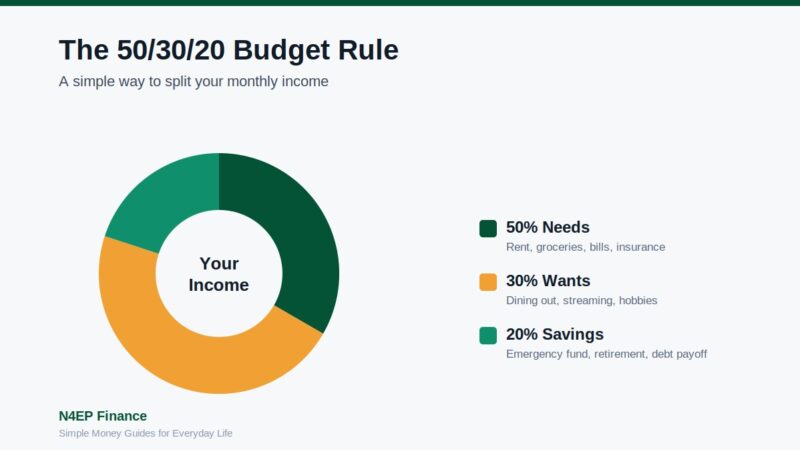
Improving your credit score often goes hand-in-hand with better overall money management. If you’re also looking to get your monthly spending under control, check out our guide on the 50/30/20 budget rule to see how a simple budgeting system can free up more cash to pay down balances faster.
Disclaimer: This article is for general informational purposes only and does not constitute personalized financial advice. Please consult a licensed financial professional before making financial decisions.


2 Comments