
Figuring out how much life insurance to buy is one of those financial decisions people tend to either skip entirely or wildly overthink. The truth is, there are a few simple formulas that get you a solid estimate in minutes — no spreadsheet required.
What You'll Learn
- Why Life Insurance Matters
- Method 1: The Income Multiplier Rule
- Method 2: The DIME Formula
- Term vs. Whole Life Insurance
- When Should You Buy Life Insurance?
- How Much Does Life Insurance Cost?
Why Life Insurance Matters
Life insurance exists to replace your income and cover financial obligations if you’re no longer there to provide for your family. If anyone depends on your income — a spouse, children, or aging parents — this kind of coverage protects them from a sudden financial crisis on top of an already difficult loss.
If nobody depends on your income financially, you may need little to no coverage at all.
Method 1: The Income Multiplier Rule
The simplest approach is to multiply your annual income by 10-15x:
| Annual Income | Suggested Coverage |
|---|---|
| $50,000 | $500,000 – $750,000 |
| $75,000 | $750,000 – $1,125,000 |
| $100,000 | $1,000,000 – $1,500,000 |
This method is quick, but it doesn’t account for your specific debts or how many years of support your family will need.
Method 2: The DIME Formula
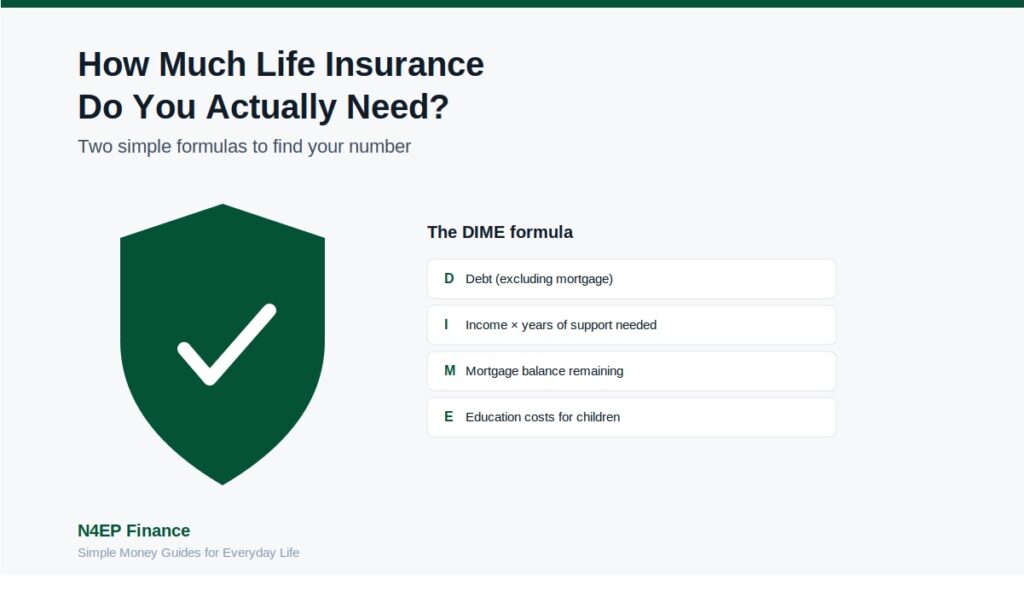
For a more precise number, financial planners often use the DIME method, which adds up four categories:
- Debt — Total of all debts excluding your mortgage (credit cards, car loans, student loans)
- Income — Annual income × number of years your family would need support (often until kids are independent)
- Mortgage — Remaining balance on your home loan
- Education — Estimated future education costs for your children
Add these four numbers together, then subtract any existing savings or life insurance you already have, to get your target coverage amount.
Example: $20,000 debt + $600,000 (income × 10 years) + $250,000 mortgage + $80,000 education = $950,000 in coverage needed.
Term vs. Whole Life Insurance
For most people, term life insurance is the more practical choice:
- Term life — Covers you for a set period (10, 20, or 30 years), is significantly cheaper, and is ideal for covering the years your family is financially dependent on you.
- Whole life — Covers you permanently and builds cash value, but premiums can cost 5-15 times more than term for the same coverage amount.
Unless you have a specific estate-planning or high-net-worth need for permanent coverage, term policies typically give families far more protection per dollar spent.
When Should You Buy Life Insurance?
Common life events that should trigger a life insurance review include:
- Getting married
- Having a child
- Buying a home
- Starting a business with debt or partners depending on you
- A significant increase in income
How Much Does Life Insurance Cost?
Term coverage is often more affordable than people expect. A healthy 30-year-old can frequently find a 20-year, $500,000 term policy for a modest monthly premium — though your actual rate depends on age, health, and coverage amount. Getting quotes from a licensed insurance agent or comparison site is the only way to know your specific rate.
For general consumer protections and guidance on shopping for insurance, the National Association of Insurance Commissioners (NAIC) offers free, unbiased resources by state.
The Bottom Line
You don’t need to guess when it comes to life insurance coverage. Start with the income multiplier for a quick estimate, then refine it with the DIME method if you want a more precise number. The most important step is simply having a policy in place if anyone depends on your income — even basic term coverage is far better than none at all.
Disclaimer: This article is for general informational purposes only and does not constitute personalized financial advice. Please consult a licensed financial professional before making financial decisions.