
If you’re trying to improve your credit score, understanding what counts as a good credit utilization ratio is one of the highest-leverage things you can learn. This single number makes up roughly 30% of your FICO Score — second only to payment history — yet many people have never calculated their own.
What You'll Learn
- What Is a Good Credit Utilization Ratio, Exactly?
- What Counts as a Good Credit Utilization Ratio?
- Why Credit Utilization Matters So Much
- How to Lower Your Credit Utilization Ratio
- Does Utilization Reset Every Month?
- The Bottom Line
What Is a Good Credit Utilization Ratio, Exactly?
Credit utilization is the percentage of your available credit that you’re currently using. It’s calculated by dividing your total credit card balances by your total credit limits, then multiplying by 100.
Example: If you have a $5,000 credit limit and a $1,500 balance, your utilization is 30% ($1,500 ÷ $5,000 = 0.30).
Utilization is calculated both per card and across all your cards combined, and both versions matter to your credit score.
What Counts as a Good Credit Utilization Ratio?
A good credit utilization ratio is generally considered to be under 30%, with under 10% considered excellent for people aiming to maximize their score. Here’s a rough breakdown:
| Utilization | Impact on Score |
|---|---|
| 0% | Neutral to slightly negative (some activity is better than none) |
| 1-10% | Excellent — ideal range for maximizing your score |
| 11-30% | Good — generally considered acceptable |
| 31-49% | Fair — starting to noticeably affect your score |
| 50%+ | Poor — significant negative impact on your score |
Interestingly, 0% utilization isn’t always ideal either — it can suggest you’re not actively using credit, which some scoring models treat slightly less favorably than very low but non-zero utilization.
Why Credit Utilization Matters So Much
Lenders view high utilization as a signal of financial stress or over-reliance on credit, regardless of whether you’re actually struggling or simply prefer using cards for everyday spending. A high balance relative to your limit suggests higher risk, even if you always pay in full.
This is why utilization can cause dramatic, fast swings in your score — unlike payment history, which builds slowly over years, utilization changes as soon as your balance is reported, meaning your score can shift significantly from one month to the next.
How to Lower Your Credit Utilization Ratio
Pay Down Balances Before the Statement Date
Your utilization is calculated based on the balance reported to the credit bureaus, which usually happens on your statement closing date — not your due date. Paying down your balance before this date, rather than just by the due date, can lower the utilization number that actually gets reported.
Request a Credit Limit Increase
Asking your card issuer for a higher credit limit — without increasing your spending — automatically lowers your utilization ratio, since the same balance now represents a smaller percentage of your total available credit.
Spread Balances Across Multiple Cards
If you have multiple cards, keeping any single card’s utilization lower (even if your overall utilization is reasonable) can help, since some scoring models also weigh per-card utilization.
Make Multiple Payments Throughout the Month
Rather than paying once at the due date, making payments throughout the month keeps your average daily balance — and therefore your reported balance — lower.
Avoid Closing Old Cards
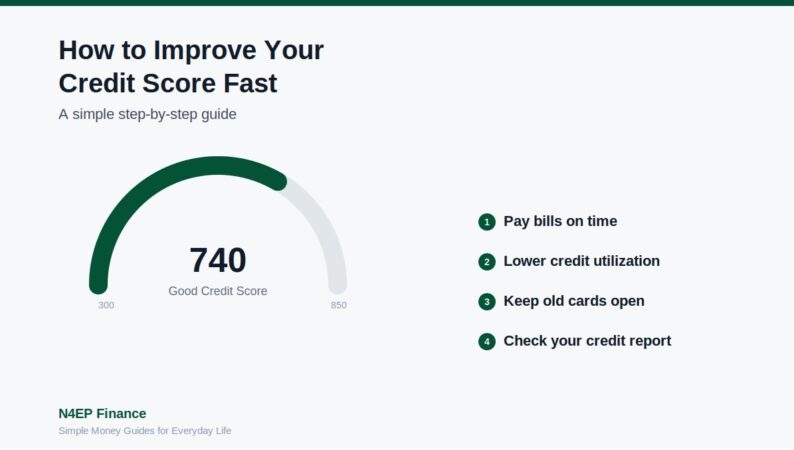
Closing a credit card reduces your total available credit, which can immediately raise your utilization ratio even if your spending hasn’t changed. This is one of the most common mistakes people make right after paying off a card — closing it feels like a natural next step, but it can quietly undo some of the score improvement from paying it down in the first place. Learn more about the trade-offs in our guide on how to improve your credit score, which covers utilization alongside other key factors.
Does Utilization Reset Every Month?
Yes. Unlike payment history, which accumulates over years, utilization is a snapshot based on your most recently reported balances. This means it can improve quickly — often within one to two billing cycles — once you pay down balances, unlike other credit factors that take much longer to shift.
For consumer-friendly explanations of how FICO Scores are calculated, myFICO offers detailed breakdowns of each scoring factor, including utilization.
Frequently Asked Questions
Frequently Asked Questions
Is it bad to have 0% credit utilization?
Does utilization matter if I always pay my balance in full?
How quickly can I improve my utilization ratio?
Should I pay off my balance early to lower utilization before applying for a loan?
The Bottom Line
Aiming for a good credit utilization ratio — under 30%, and ideally under 10% — is one of the fastest ways to boost your credit score, since utilization can shift within a single billing cycle unlike slower-moving factors like payment history. Whether you pay down balances early, request a credit limit increase, or spread spending across multiple cards, small adjustments to this one number can meaningfully move your score in a short amount of time.
Because this factor moves so quickly compared to the rest of your credit profile, it’s often the first thing worth checking whenever your score seems lower than expected, and the first thing worth fixing before any major loan or credit application.
Disclaimer: This article is for general informational purposes only and does not constitute personalized financial advice. Please consult a licensed financial professional before making financial decisions.