

Most people check their credit report once, maybe when applying for a loan, and never look at it again. But understanding how often to check your credit report actually matters — reviewing it regularly is one of the simplest ways to catch errors, spot fraud early, and stay on top of your financial health.
What You'll Learn
- How Often to Check Your Credit Report: The General Rule
- Why Knowing How Often to Check Your Credit Report Matters
- How to Check Your Credit Report for Free
- Credit Report vs. Credit Score: What’s the Difference?
- Does Checking Your Own Credit Report Hurt Your Score?
- What to Look for When You Check Your Report
How Often to Check Your Credit Report: The General Rule
The general recommendation is to check your credit report at least once every four months, rotating between the three major bureaus (Experian, Equifax, and TransUnion).
This spacing means you’re getting a fresh look at your file roughly every 12 weeks throughout the year, without paying for a monitoring service.
If you’re actively working on improving your credit, preparing for a major purchase like a home or car, or have previously been a victim of identity theft, checking more frequently — monthly, or even weekly through free monitoring tools — is reasonable and often worthwhile.
Why Knowing How Often to Check Your Credit Report Matters
- Catching errors early. Incorrect late payments, accounts that aren’t yours, or outdated balances can quietly drag down your score for months if left unnoticed.
- Detecting fraud quickly. The sooner you spot an unfamiliar account or inquiry, the sooner you can dispute it and limit the damage.
- Tracking your progress. If you’re working to improve your score, regular checks show whether your efforts (paying down balances, disputing errors) are actually moving the needle.
- Avoiding surprises before a big application. Checking your report a few months before applying for a mortgage or auto loan gives you time to fix any issues before a lender sees them.
How to Check Your Credit Report for Free
U.S. consumers are entitled to a free credit report from each of the three major bureaus once per year through AnnualCreditReport.com, the only site authorized by federal law for this purpose. Since the pandemic, many bureaus have continued offering free weekly access as well, though it’s worth confirming current availability directly on the site.
A practical strategy: request one bureau’s report every four months (Experian in January, Equifax in May, TransUnion in September, for example) so you get a full year of coverage without paying for a monitoring service.
Credit Report vs. Credit Score: What’s the Difference?
It’s worth clarifying a common point of confusion. Your credit report is a detailed record of your credit accounts, payment history, and inquiries. Your credit score is a three-digit number calculated from that report. Checking your report shows you the full underlying detail; checking your score gives you a quick snapshot but not the specifics behind it.
Many banks and credit card issuers now offer free credit score access, which is useful for quick monitoring, but it doesn’t replace periodically reviewing the full report for errors. A high score with an error buried in the underlying report can still leave you vulnerable — the score alone won’t tell you an account was opened fraudulently in your name, for example, until the damage has already affected your utilization or payment history.
Does Checking Your Own Credit Report Hurt Your Score?
No. Checking your own credit report or score is considered a soft inquiry, which has no impact on your credit score, no matter how often you do it. This is different from a hard inquiry, which happens when a lender checks your credit as part of a loan or credit card application, and can cause a small, temporary dip in your score.
This is one of the most persistent credit myths — many people avoid checking their own credit out of a mistaken fear it will lower their score, when in reality, regular self-checks are entirely risk-free.
What to Look for When You Check Your Report
- Accounts you don’t recognize, which could indicate identity theft
- Incorrect late payments that don’t match your actual payment history
- Wrong balances or credit limits, which can distort your credit utilization ratio
- Outdated personal information, like an old address or misspelled name, which is usually harmless but worth correcting
- Accounts that should have aged off, since most negative information should drop after seven years
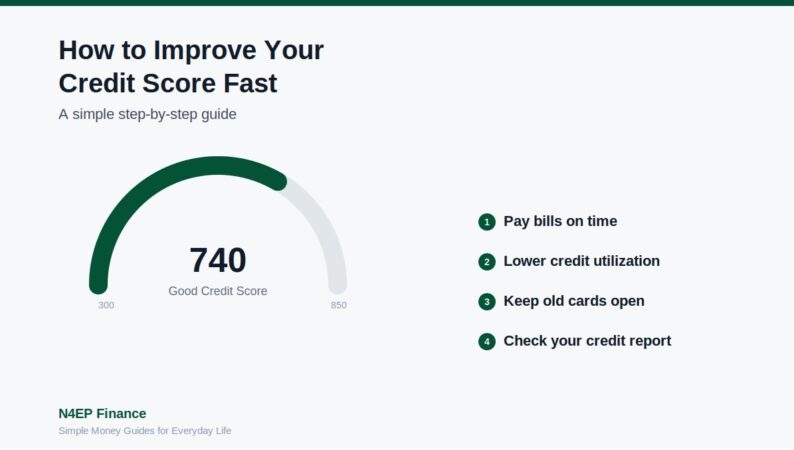
If you find an error, our guide on how to improve your credit score covers the broader habits that matter alongside keeping your report accurate.
Frequently Asked Questions
Frequently Asked Questions
Will checking my credit report too often hurt my score?
Is it worth paying for a credit monitoring service?
What should I do if I find an error on my credit report?
Do all three credit bureaus show the same information?
The Bottom Line
Checking your credit report regularly — roughly every four months, rotating bureaus — costs nothing and carries zero risk to your score. It’s one of the simplest, highest-value habits in personal finance: a few minutes every few months can catch costly errors or fraud long before they become a bigger problem.
Set a recurring reminder on your phone or calendar if you tend to forget — treating this like any other routine maintenance task, similar to changing a smoke detector battery, makes it far more likely you’ll actually stick with the habit long-term rather than only remembering right before a major loan application.
Disclaimer: This article is for general informational purposes only and does not constitute personalized financial advice. Please consult a licensed financial professional before making financial decisions.

1 Comment